

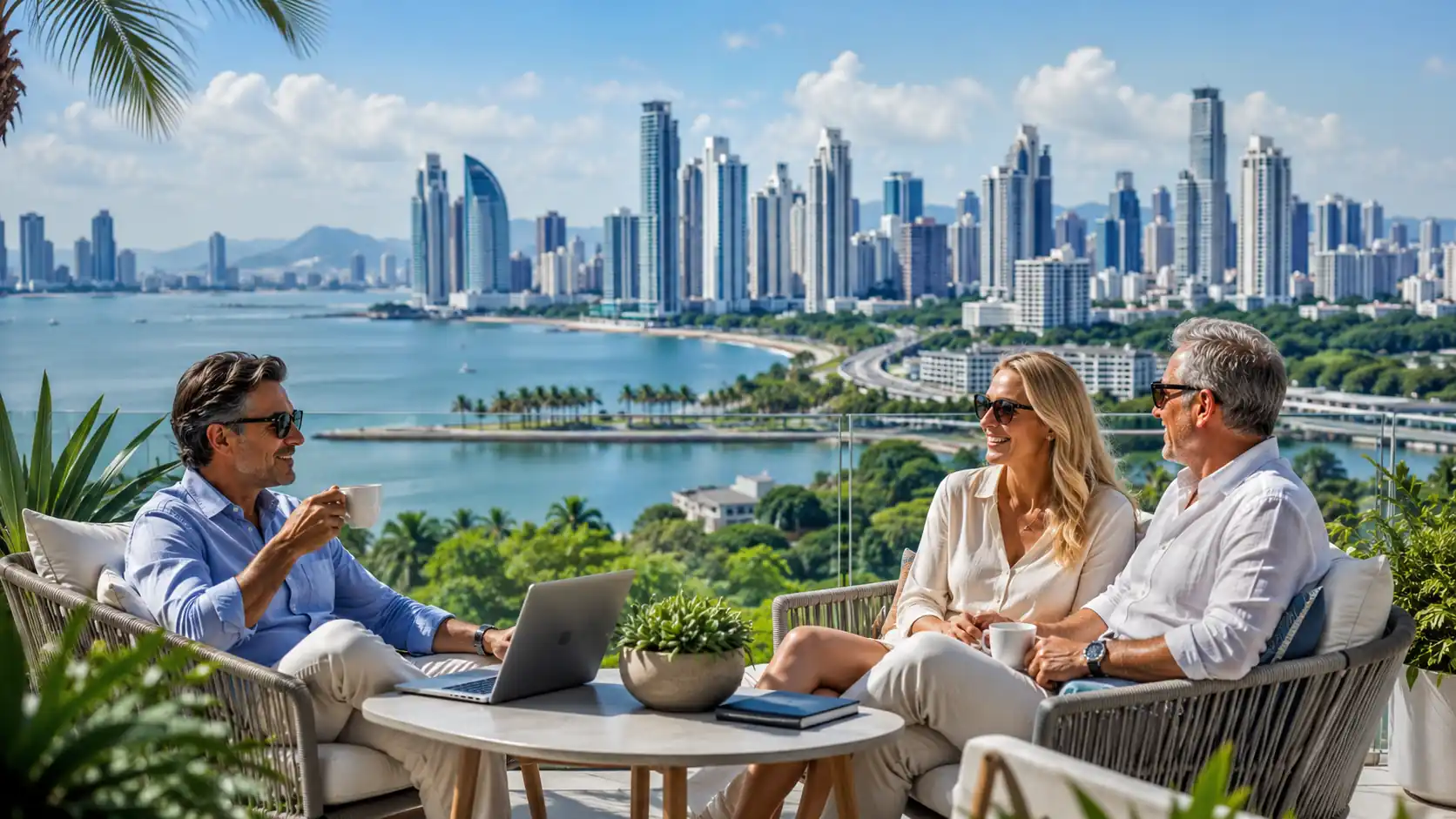
Living in Panama as a U.S. citizen can be attractive for retirees, investors, entrepreneurs, remote professionals, and families seeking to establish an international alternative without losing their connection to the United States.
Panama combines widespread use of the U.S. dollar, air-travel connectivity with North America, private services, international communities, real estate opportunities, and legal residency pathways. While it has many advantages, its suitability depends several factors such as budget, family circumstances, professional activity, immigration tracks, wealth planning goals, amongst others.
For certain profiles, however, it offers a competitive balance between quality of life, mobility, and monetary stability.
10 Reasons to Live in Panama as a U.S. Citizen
1. A Quality of Life Adaptable to Different Profiles
Panama allows people to choose between a modern capital city, mountain towns, coastal communities, and tropical environments. Panama City concentrates private hospitals, international schools, and business services. Boquete offers milder temperatures and an established international community. Coronado and Pedasí are better suited to those seeking beaches and more coastal living.
Certain areas may offer a favorable balance between housing, services, and lifestyle compared with major U.S. cities. However, premium areas, imported products, and international education can increase the budget.
For this reason, renting before buying and experiencing the area for several months is often advisable.
2. Widespread Use of the U.S. Dollar
The dollar circulates widely in Panama, and the Balboa maintains parity with it. For a U.S. citizen, this makes it easier to compare rent, insurance, pensions, properties, and everyday expenses.
This advantage is especially relevant for retirees receiving income in dollars and investors who prefer to avoid the volatility of other Latin American currencies.
Using the same currency does not mean that everything is inexpensive. The real cost depends on location, contracted services, and lifestyle.
3. Direct Connectivity with the United States
Tocumen International Airport operates as one of Latin America’s main connection hubs and links Panama with cities in North America, South America, Central America, the Caribbean, and Europe.
This connectivity makes it possible to maintain family, medical, and business ties with the United States and also differentiates Panama from more distant South American destinations.
The advantage should be evaluated together with the selected area of residence, since living far from the capital may add several hours of travel to the airport.
4. An Established International Community
Panama has expatriate communities in Panama City, Boquete, Coronado, Pedasí, and other locations. This makes it easier to find doctors, attorneys, schools, and service providers accustomed to working with foreign residents.
For families, international schools can make the transition easier. For retirees and people relocating alone, expatriate networks help build relationships and address everyday needs.
Even so, learning Spanish and engaging with the local community can improve integration and allow people to navigate daily life more independently.
5. Access to Private Healthcare and Modern Services
Panama City and other major urban centers have private hospitals, clinics, and specialists used by international residents. For some Americans, certain services may even be more accessible than in their home country.
Advanced care is more widely available in the capital than in rural or island areas. Retirees, families, and people with specific medical needs should therefore consider their distance from hospitals.
It is also advisable to compare local and international insurance policies covering hospitalization, emergencies, and long-term treatment.
6. An Economy Connected to International Trade
The Panama Canal, ports, logistics, aviation, and financial services have made the country a strategic point for trade throughout the Americas.
This environment supports the presence of multinational companies, specialized providers, and opportunities in logistics, tourism, construction, and services. For a U.S. entrepreneur, Panama can even serve as a regional platform.
(The country’s economic relevance however, does not guarantee the profitability of every business. Each project requires its own legal, financial, and commercial analysis.)
7. Real Estate Investment Opportunities
The Panamanian market offers urban housing, coastal properties, tourism developments, and residences in mountain areas. A property can be used as a home, rental asset, or part of a wealth strategy.
Note: Before purchasing, it is advisable to review ownership, registered liens, market value, maintenance expenses, and rental potential. Two decisions must also be separated: a property suitable for living is not always the best investment, and a profitable investment does not always meet the requirements of an immigration category.
8. A Territorial Tax System
Panama applies a territorial tax system, which primarily taxes income whose source is located within the country. This model may be attractive to entrepreneurs, investors, and individuals with international income.
While this may have advantages, it should however not, be interpreted as a complete absence of taxes. Treatment depends on where the income is generated, where the activity is carried out, and the individual’s tax residency.
Note: In addition, U.S. citizens generally maintain tax obligations to the United States even when living abroad. Tax planning should analyze both countries together and be tailored to each individual case.
9. Residency by Investment Options
Panama has a permanent residency category for qualified investors. This pathway allows an investment recognized under current regulations to be linked to an application for legal residency.
Residency by investment in Panama may interest those who want to acquire an asset and establish a permanent base in Latin America. The investment must qualify, come from documented funds, and comply with current conditions.
Note: The process itself does not guarantee approval as authorities still need to perform due diligence activities as such background information checks, documentation, source of capital review, etc.
Immigration residency is also not automatically equivalent to tax residency, citizenship, or authorization to work as an employee.
10. The Possibility of Building a New Life in Panama with Your Family
Panama can be used as a primary residence, second home, retirement destination, or regional base. This flexibility makes it possible to adapt the project to each family’s needs.
A retired couple may prioritize tranquility and healthcare, a family with children may seek international schools and proximity to the capital, while an entrepreneur may need air connections and professional services – all unique motivations that affect any immigration decision.
Building a new life in Panama with the family requires coordinating housing, education, healthcare, budget, and legal residency. The best decision comes from aligning the location and immigration pathway with the real needs of all family members.
How Orience Can Help You Establish Yourself in Panama
Choosing Panama involves more than simply finding a home. It also requires identifying the right immigration category, reviewing the investment, and preparing the documentation correctly.
At Orience, we can help you assess whether Panama aligns with your goals, compare residency options, and coordinate the process with local professionals with the goal of connect residency, investment, and the new life project within a coherent strategy.
In the end: why Panama is a strong Plan B
Panama may be one of the best countries for certain U.S. expats because it combines quality of life, use of the dollar, proximity to the United States, private services, an international community, and investment opportunities.
Its appeal does not come from a single advantage, but from also the possibility of maintaining ties with the United States while building a new life in Panama.
Are you considering living in Panama as a U.S. citizen? Complete Orience’s contact form to analyze your situation and learn about the available residency pathways.
Frequently Asked Questions About Living in Panama as a U.S. Citizen (FAQs)
It is not essential in some international communities, but speaking Spanish makes administrative procedures, integration, and daily life easier.
Yes. Renting initially allows you to assess the climate, services, transportation, and real cost of an area before investing.
Yes. Appropriate insurance facilitates access to hospitals, specialists, and treatments, especially outside the public healthcare system.
Residency and work authorization are separate legal concepts. Working as an employee may require an additional permit.
It may be possible for certain immgriation paths, but the immigration category, required physical presence, and potential tax implications should be reviewed.
Would you like to contact Orience?
Your Journey, our expertise, global possibilities.
Ready to explore your global mobility options?
Our global mobility specialists help individuals, families and businesses find the right residency, citizenship, corporate immigration or digital nomad solution — tailored to your goals.

Personalised assessment
We listen first, then recommend what fits you best.
Specialists in 14+ countries
Deep local expertise. Global reach.
Assistance in 15+ languages
Communicate in the language you’re most comfortable with.
Support for individuals, families & businesses
Solutions for every life stage and business need.
Other ways to connect
Send us a message
Find an office near you