

Andorra signed its Association Agreement with the European Union in Brussels on October 19, 2026, together with San Marino. The agreement gives the principality access to the EU single market under the same competition rules as member states, close to what Norway, Iceland and Liechtenstein have through the European Economic Area, La Vanguardia reported. It is not in force yet. And for non-EU families who live in Andorra or are thinking of moving there, the agreement that changes the most is a different one, still waiting to be signed.
What Was Signed in Brussels
The signature closes a negotiation that began in 2015 and was concluded in December 2023, after talks with Monaco were suspended. According to the European Commission, the agreement covers access to the Internal Market and cooperation in research, education, social policy, the environment and consumer protection. Financial services open up gradually, once the EU has assessed Andorra's regulatory and supervisory framework. The EU also signed updated monetary agreements with both countries, which already use the euro.
Andorra does not join Schengen and keeps control of its own borders.
What Still Has to Happen
The European Parliament must give its consent first, which La Vanguardia expects between the end of this year and early 2027. Then the Government of Andorra will call a consultative referendum whose result it treats as politically binding. Only if the vote is favorable does the text go to the General Council, Andorra's parliament, where it needs a two-thirds majority. The signature does not bring the agreement into force in Andorra, not even provisionally.
There is no date for the referendum. Head of Government Xavier Espot said it will be held after a calm debate on the consequences and away from an election campaign; Andorra's general elections are expected in spring 2027. Andorrans could still reject the agreement, and Trade Commissioner Maroš Šefčovič admitted in Brussels that referendums are difficult.
Free Movement Covers EU and Andorran Nationals, Not Other Residents
The agreement brings free movement of persons between the EU and Andorra, with limits on some types of residence modelled on those Liechtenstein obtained in the EEA. Those rights belong to EU citizens, Andorran nationals and their family members.
A joint declaration attached to the text leaves no room for doubt: immigration policy is not covered, and neither are the residence rights of third-country nationals, except family members of EU or Andorran citizens. A Mexican or Indian investor living in Andorra gains no right to live or work in Spain or France from this agreement.
The Agreement That Matters More for Non-EU Residents
A separate agreement between the EU and Andorra on border management is the one that changes daily life for foreign residents. Negotiations ended on January 26, 2026, both sides initialled the text on March 30, and on September 7 the Commission proposed that the EU sign it and apply it provisionally as soon as possible. It has not been signed yet, and after signature it still needs ratification by the European Parliament and Andorra's General Council.
Today, a non-EU national with an Andorran residence permit moves freely only into Spain and France, according to the Government of Andorra. For any other Schengen country, they have to check its entry rules before travelling. The Entry/Exit System, fully running since April 10, 2026, adds another problem: there are no systematic checks when people leave France or Spain for Andorra, so these residents risk being recorded as overstayers in Schengen. The Commission cites exactly that risk to explain why the agreement is urgent.
Once applied, the border agreement would change three things:
- Schengen access: Andorran residence permits would have Schengen-wide effect, allowing visa-free stays of up to 90 days in any 180-day period, with no ETIAS and no registration in the Entry/Exit System.
- Security screening: every new or renewed permit would first go through a security assessment by France or Spain, including checks against EU, national and international databases.
- Real presence: keeping the right to reside would depend on a genuine connection with Andorra, based on actual and regular physical presence.
An Andorran permit would open Schengen, and it would be harder to obtain or keep without a real life in the country.
Andorra Residency in 2026: The Current Numbers
Neither agreement sets the price of Andorran residence. Andorran law does, and it changed this year. Law 2/2026, in force since February 13, raised the requirements for passive residence, the permit for people who live in Andorra without working there:
- A permanent investment of at least €1,000,000 in Andorran assets, up from €600,000, or €400,000 if it goes into the country's Housing Fund (Fons d'Habitatge).
- Where real estate counts toward the investment, more than €800,000 per property.
- A non-refundable payment of €50,000 to the Andorran Financial Authority, plus €12,000 per dependent. It replaces the old refundable deposit.
- At least 90 days a year of effective residence, and annual income above three times the minimum wage, plus one more minimum wage per dependent.
Buying a home as a foreigner also costs more. The tax on foreign real estate investment rose from 3% to 6% on a first property and from 5% to 10% on a second, the government announced in February. Foreign buyers need prior authorization and can acquire one house or up to two apartments. Residents who cannot prove three years in Andorra out of the last ten are still treated as foreign investors.
What This Means If You Are Considering Andorra
- You want Andorra mainly for Schengen access: wait for the border agreement to be signed and applied. Until then, the permit gives you free movement into Spain and France only.
- You plan to live there: the 90-day minimum and the coming presence test suit people who will spend real time in the country. The higher entry cost is the main change for you.
- You need Schengen access now: a residence permit from a Schengen country already gives it. Portugal's residence by investment asks for only a few days a year, and Spain's non-lucrative visa suits people ready to move to Spain. Our guide to long-term options for Schengen travel compares the main routes.
How Orience Can Help
Orience is headquartered in Barcelona, about three hours by road from Andorra la Vella. We advise families and investors on residence in Andorra, Spain, Portugal and other European countries, and we are following both agreements through the European Parliament and Andorra's referendum. If you are weighing Andorra against another European residence, we will compare them with you on cost, time in the country and travel.
Connect with our advisory team by filling out the form below.
Frequently Asked Questions
Does the EU Association Agreement give Andorran residents the right to live in the EU?
Only if they are Andorran nationals, EU citizens or their family members. A joint declaration to the agreement excludes the residence rights of other third-country nationals living in Andorra.
Is Andorra joining Schengen?
No. The separate border management agreement would remove systematic border checks and give Andorran residence permits Schengen-wide effect, but Andorra stays outside Schengen and keeps control of its borders.
When will the Association Agreement enter into force?
There is no date yet. It needs the consent of the European Parliament, a favorable consultative referendum in Andorra and a two-thirds vote in the General Council. It will not apply in Andorra, even provisionally, until those steps are complete.
How much does passive residency in Andorra cost in 2026?
Since February 13, 2026, the main applicant must invest at least €1,000,000 in Andorran assets, or €400,000 in the Housing Fund, and pay a non-refundable €50,000 to the Andorran Financial Authority, plus €12,000 per dependent.
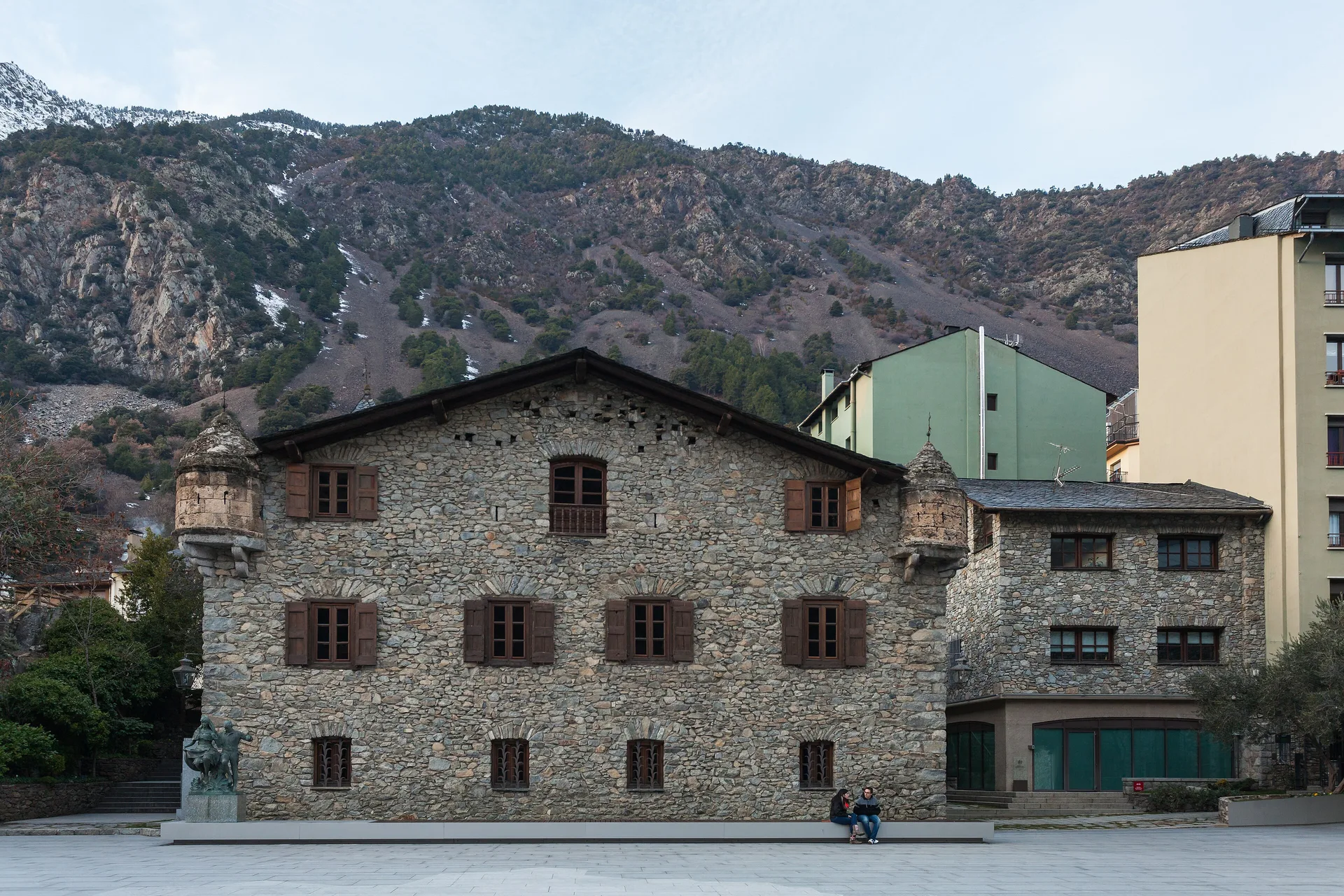
Cover photo: Casa de la Vall, the historic seat of Andorra's parliament, in Andorra la Vella. Photo by Diego Delso, CC BY-SA 3.0, via Wikimedia Commons.
