

Spain will hold a general election on November 29, 2026. Prime Minister Pedro Sánchez dissolved parliament on October 5, three days after Congress rejected two government housing decrees. For international investors and families planning a move to Spain, the vote matters for one clear reason: it could return to power the party that fought to keep the Spanish golden visa.
Oriol Molas, founder and managing partner of Orience, gave his view of the election to IMI Daily, the investment migration news site. Below, we look at the two likely outcomes and at the residency options that stay open whoever wins.
Why Spain Is Going to the Polls
On October 2, Congress voted down two housing decree-laws that the cabinet had approved on September 29. They extended protection against certain evictions, regulated seasonal and room-by-room rentals and extended rental contracts. Junts, the Catalan party that had negotiated the first text with the government, voted against them alongside the People’s Party (PP) and Vox.
Without a stable majority to pass his housing agenda, Sánchez chose to go to the polls. The law requires 54 days between dissolution and the vote, which makes Sunday, November 29 the earliest possible date.
What the Polls Say
Private polling points to a change of government. A Sigma Dos survey for El Mundo, carried out between September 22 and October 1, projects 140 seats for the PP and 63 for Vox, against 103 for the Socialist Party (PSOE). An absolute majority requires 176 of the 350 seats in Congress. Spain’s state pollster, the CIS, still places the PSOE first, and the Sigma Dos fieldwork closed before Congress rejected the decrees.
Polls are not results, though. Molas notes that Sánchez “has chosen his battlefield carefully by calling the election in the middle of the housing debate, which is set to mobilize the left.” He also recalls that Spanish elections “are often decided by a handful of seats.”
Two Scenarios for Investors
A Center-Right Government
This is the outcome most investors are watching. With the PP in government, Molas would “fully expect a return to an investment-friendly agenda, including incentives along the lines of the golden visa to attract international capital back to Spain.”
The party’s track record supports that reading. “The PP majority in the Senate already opposed abolishing the program,” Molas says. In December 2024 the PP-controlled Senate blocked the abolition, Congress lifted that block by 177 votes to 170, and the golden visa closed to new applicants on April 3, 2025. The PP has not yet said whether it would reinstate the program. Its leader, Alberto Núñez Feijóo, who would likely become prime minister if the conservatives win, has made building one million homes his headline housing pledge.
A Renewed Left-Wing Government
If Sánchez wins again, Molas expects continuity: “more rental regulation, a tougher line on non-resident buyers and no investor visa.”
One proposal is already gone. The plan to tax property purchases by non-EU buyers who don’t live in Spain at up to 100% of the price never found enough votes in Congress, and it died with the dissolution. A new left-wing majority could bring it back.
Housing Rules Return During the Campaign
Dissolving parliament does not remove the government. On October 6, the cabinet approved two new housing decrees that keep the essence of the rejected ones. The first, which extends rental contracts by up to two years for tenants who are up to date with their payments and caps rent increases, took effect on publication. The second, on the automatic renewal of rental contracts, will only apply if it is ratified.
With no Congress in session, ratification falls to the Permanent Deputation, the 69-member committee that stands in for parliament until a new one is constituted. The Basque Nationalist Party (PNV) has said it will back the first decree and opposes the second.
Landlords and buyers will spend the campaign without knowing which rental rules will last, which Molas calls “more uncertainty for owners and investors.” His view is that rent caps “treat the symptoms, not the cause,” and that a center-right government “is far more likely to focus on supply and on attracting investment.”
Did the Golden Visa Cause the Housing Crisis?
The government closed the program to cool housing prices. The numbers make that hard to sustain. Housing Ministry data link 14,576 golden visas to property purchases between 2013 and 2023, a decade in which Spain registered more than 5 million home sales. Golden visa buyers were “well below 0.5% of the market,” Molas says.
The government’s answer was that the purchases were concentrated in a few places: a third of those visas came from Barcelona, and in Marbella they reached 7.1% of home sales in a single year.
For Molas, a year and a half on, the abolition “was a political signal, not a housing policy: Spain lost international capital and talent with no visible effect on rents or prices.” He sees a structural problem, with population growing faster than the housing stock, that can only be solved by building more: releasing land, speeding up permits, giving owners and developers legal certainty, and supporting new construction and build-to-rent.
Reality Check: What Investors Should Know
- Nothing changes before a new government is formed. Any return of an investor visa would require new legislation after the November 29 vote.
- No party has committed to reinstating the golden visa. The PP opposed the abolition but has not said whether it would bring the program back.
- Existing golden visa holders are not affected. They keep their permits and their renewal rights.
- Pending bills start over. The bill that would have offered Spanish nationality to Sahrawis born in Western Sahara under Spanish administration lapses and will have to begin again in the new legislature. Its final shape, Molas notes, “will depend on the new majority.”
Spain Remains Open: Residency Routes Available Today
The election does not close any door that is open today. “Spain remains open,” Molas says. “The end of the golden visa closed one route, but the non-lucrative visa, the digital nomad visa and the entrepreneur route remain fully available.” These are the main options:
- Non-Lucrative Visa: for retirees and people with passive income who want to live in Spain without working locally.
- Digital Nomad Visa: for remote workers and freelancers whose employers or clients are outside Spain.
- Entrepreneur Visa: for founders launching an innovative business in Spain.
- Highly Qualified Professional Visa: for senior professionals hired by a company in Spain.
These routes can lead to permanent residency after five years, although they require living in Spain for at least six months a year. For investors who want a European residence without relocating full-time, Portugal, Greece, Italy and Latvia continue to offer residency by investment.
How Orience Can Help
Orience was founded in Spain and has advised international families, investors and companies on Spanish residency for more than a decade, including throughout the golden visa years. “The fundamentals of Spain as a place to live and invest haven’t changed,” Molas says.
We are following the campaign and any proposals on investor residency closely. If you are weighing a move to Spain, or want to know which route fits your profile today, connect with our advisory team by filling out the form below.
Frequently Asked Questions
Is Spain’s golden visa coming back?
Not for now. The program closed to new applicants on April 3, 2025. The PP opposed its abolition, but no party has committed to reinstating it, and any new investor visa would need legislation passed by the next parliament.
I already hold a Spanish golden visa. Does the election affect me?
No. Existing holders keep their residence permits and their renewal rights.
Which routes to Spanish residency are open today?
The non-lucrative visa, the digital nomad visa, the entrepreneur visa and the highly qualified professional visa all remain available and do not depend on the election.
When will the new government take office?
After the November 29 vote, the new Congress must be constituted and elect a prime minister. How long that takes depends on the results and on negotiations between parties.
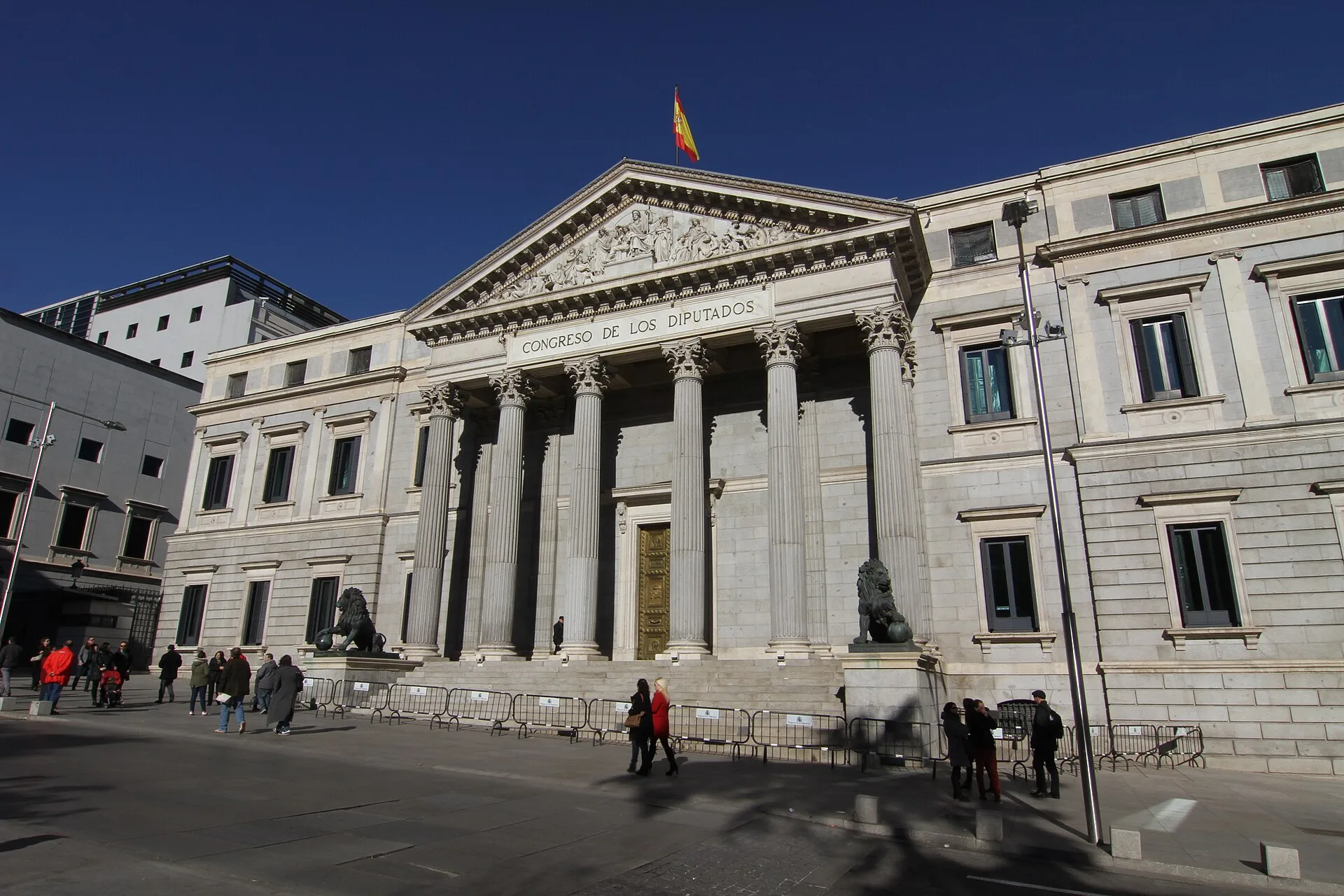
Cover photo: Congreso de los Diputados, Madrid. Photo by Vickybol, CC BY-SA 3.0, via Wikimedia Commons.
