

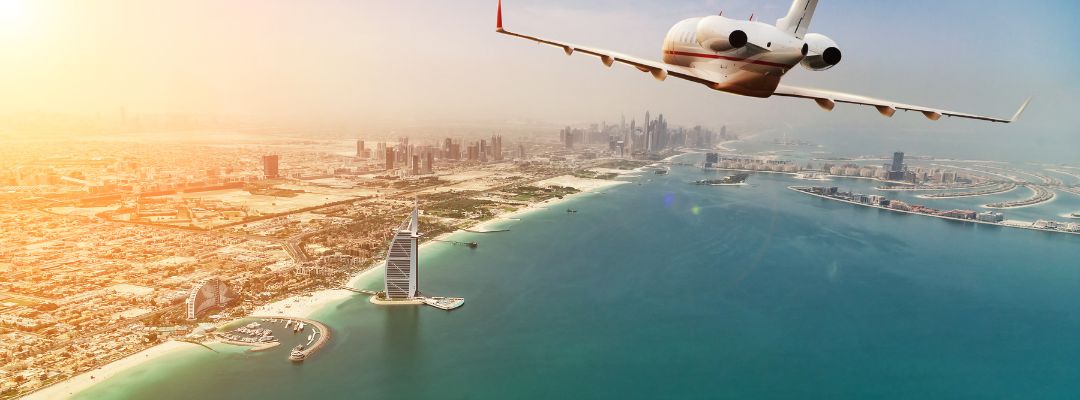
Dubai has established itself as one of the world’s leading economic hubs thanks to a clear strategy focused on diversification, attracting foreign investment, and developing non-oil sectors.
Looking ahead to 2026, the emirate offers real opportunities for companies and investors who know how to correctly interpret market signals.
Identifying the fastest-growing sectors in Dubai in 2026 is not about following media trends, but about analyzing structural demand, public policies, capital flows, and operational viability.
In this guide, you’ll find a practical perspective to anticipate opportunities and turn them into strategic decisions, with a clear and verifiable approach.
Why Dubai will continue to grow in 2026
Dubai’s growth is supported by several structural pillars. Its geographic location positions it as a bridge between Europe, Asia, and Africa, facilitating trade, logistics, and business mobility.
This is reinforced by competitive taxation, world-class infrastructure, and a regulatory framework designed to support international businesses.
In recent years, non-oil sectors have come to represent the majority of the UAE’s GDP, strengthening the resilience of the economic model against global cycles.
This shift responds to long-term economic plans aimed at attracting talent, innovation, and international capital, creating a stable environment for growth.
What defines a high-potential sector in Dubai
A sector with true growth potential presents specific characteristics that can be validated through market indicators and signals.
- Sustained demand from residents, tourists, or businesses.
- Institutional support through incentives, specialized hubs, or favorable regulation.
- Recurring investment, both local and international, visible in projects, funding, and business expansion.
- Regional scalability from Dubai to nearby markets.
These criteria help distinguish solid opportunities from short-lived trends.
How to identify real opportunities before investing or expanding
To anticipate opportunities with confidence, it’s important to combine quantitative and qualitative indicators.
The goal is to validate that growth is real, demand is sustainable, and the model is viable for a foreign company.
- Growth in business volume by sector and sub-segment.
- Increase in the number of new companies and licenses issued.
- Creation of specialized jobs and demand for technical profiles.
- Inflows of foreign direct investment and announced projects.
- Regulatory clarity and manageable barriers to entry.
When these elements are aligned, the sector typically offers a more stable opportunity and is less dependent on short-term cycles.
Applied technology and artificial intelligence
Technology is one of the main drivers of growth in Dubai.
The emirate promotes the adoption of artificial intelligence, automation, and digital solutions across sectors such as public administration, logistics, tourism, healthcare, and finance.
This creates real demand for B2B companies focused on operational efficiency, data analytics, cybersecurity, and digital transformation.
In addition, the ecosystem is strengthened by specialized hubs, investment in innovation, and a regional market that uses Dubai as an entry point.
Fintech and digital financial services
Dubai has become a key financial hub in the MENA region, driven by international trade, an expatriate population, and service digitalization.
Demand for digital payments, digital banking, compliance infrastructure, and financial management solutions is fueling fintech growth.
This sector is particularly attractive when a project adds value in efficiency, compliance, user experience, or cross-border commerce integration.
As it is a regulated sector, the key is to carefully assess licenses, requirements, and implementation timelines.
Logistics, trade, and cross-border e-commerce
Logistics is one of the fastest-growing sectors in Dubai for 2026.
The reason is structural: Dubai concentrates strategic port and airport infrastructure and operates as a regional and global distribution hub.
The growth of cross-border e-commerce has increased the need for services such as warehousing, fulfillment, last-mile delivery, and integrated supply chain solutions.
For companies focused on international trade, this sector offers clear traction and scalability, provided operations and costs are well planned.
Premium tourism, hospitality, and experiences
Tourism remains a key economic engine in Dubai, especially in the premium segment.
The emirate’s strategy is built around international events, high-end hospitality, and an experience-driven offering that attracts year-round demand.
Opportunities are not limited to hotels: dining, leisure, wellness, corporate events, and personalized services are also growing.
By 2026, success in this sector often depends on differentiation through quality, concept, and operational capability.
Real estate, construction, and related services
Dubai’s real estate market maintains strong demand driven by international residents, investors, and new professional profiles looking to relocate.
Growth is not limited to buying and selling, but also includes asset management, property management, auxiliary services, and proptech.
This sector is often attractive for value-added models focused on operational efficiency and recurring services , beyond pure speculation.
Proper evaluation requires reviewing cycles, location, segment-specific demand, and regulatory costs.
Healthcare, biotech, and wellness
The healthcare sector is growing due to two factors: an increasing resident population and the expansion of medical tourism.
Dubai invests in hospitals, specialized clinics, laboratories, and digital health solutions, opening space for providers and innovative companies.
It is a sector with stable demand and long-term potential, but also with strict regulatory requirements.
Opportunities tend to be stronger when supported by specialization, quality of care, and processes aligned with local regulations.
Energy, sustainability, and mobility
The energy transition is driving opportunities in efficiency, renewable energy, and sustainable mobility.
Although oil remains relevant in the UAE, investment in clean technologies and sustainability is growing and reflected in projects and public policies.
This sector is particularly attractive for consulting, technology, engineering, and solution providers that reduce costs or emissions.
In 2026, competitive advantage often lies in measurable impact, proven efficiency, and execution capability.
Education, corporate training, and edtech
Business growth generates sustained demand for specialized training.
This includes private education, executive training, technical upskilling, and corporate programs for companies hiring international talent.
The edtech segment grows when it offers flexible learning, relevant certifications, and solutions tailored to corporate needs.
Viability depends on positioning, partnerships, and acquisition capacity in a competitive market.
Creative industries, media, and the digital economy
The creative industry is gaining traction in Dubai due to the growth of brands, events, tourism, and digital consumption.
Marketing, audiovisual production, digital media, and the creator economy form an ecosystem that attracts international talent.
This sector tends to perform well when creativity is combined with structure: packaged services, clear operations, and a B2B or premium focus.
Opportunities become more solid when the business relies on recurring contracts and a differentiated value proposition.
Checklist: how to turn a sector into a profitable decision
To move from analysis to action, it’s useful to apply a checklist that reduces mistakes and cost overruns.
- Fit: the sector aligns with your capabilities, commercial network, and revenue model.
- Demand: there is verifiable demand that does not rely on a single trend.
- Regulation: the regulatory framework is understandable and manageable for your case.
- Costs: you understand licensing, operating, visa, office, and compliance costs.
- Scalability: you can grow from Dubai into other markets without rebuilding the entire structure.
- Execution: you have a realistic implementation plan with timelines and responsibilities.
If several checklist points fail, the opportunity may be more fragile than it appears.
Common mistakes when choosing a sector in Dubai
- Confusing media hype with real, sustained traction.
- Choosing a license or activity that does not reflect the business’s actual operations.
- Underestimating recurring costs, banking, hiring, and compliance.
- Entering without a market plan, assuming Dubai sells itself just by being Dubai.
In practice, these mistakes often surface after the company is already incorporated, and correcting them requires time, restructuring, and additional costs.
How Orience supports you in seizing opportunities in Dubai
Orience supports companies, entrepreneurs, and investors throughout the full process of landing in the UAE with confidence.
The approach combines strategic analysis, appropriate legal structuring, tax planning, and operational support to ensure the project is sustainable.
- Assessment: sector analysis, business fit, and operational viability.
- Design: corporate structure aligned with objectives, activity, and clients.
- Execution: incorporation, licenses, visas, and launch.
- Continuity: support for compliance, adjustments, and business scaling.
The goal is not just to set up a company, but to ensure the structure is coherent with the chosen sector and growth plan.
Conclusion: how to anticipate real opportunities in Dubai for 2026
Dubai offers an exceptional environment for growth in 2026, but the best opportunities emerge when analysis is rigorous and execution is well structured.
Identifying the fastest-growing sectors in Dubai in 2026 is the first step, but real value lies in validating demand, understanding regulation, controlling costs, and planning a sustainable market entry.
With a well-structured approach and specialized support, Dubai can become a solid platform to invest, expand, and scale into other regional markets.
Frequently asked questions
Which sectors are expected to grow the most in Dubai by 2026?
Technology and artificial intelligence, logistics and e-commerce, fintech, premium tourism, real estate, healthcare, and sustainability stand out due to structural demand and expansion.
Which sector is best for a foreign company offering B2B services?
Technology, specialized consulting, corporate services, B2B fintech, and logistics solutions usually fit well, provided the license and structure align with the business model.
Is it more profitable to invest in real estate or operating businesses in Dubai?
It depends on the profile. Real estate is typically more asset-based, while an operating business may offer greater scalability but requires ongoing execution and management.
What do I need to expand my company to Dubai from Spain?
You typically need to define the activity, choose the jurisdiction, obtain a license, plan banking and compliance, and process residency if applicable.
Can Orience help decide the sector and execute the plan in the UAE?
Yes. Orience supports clients from opportunity analysis and sector fit to incorporation, licensing, visas, and compliance support to operate with confidence.