
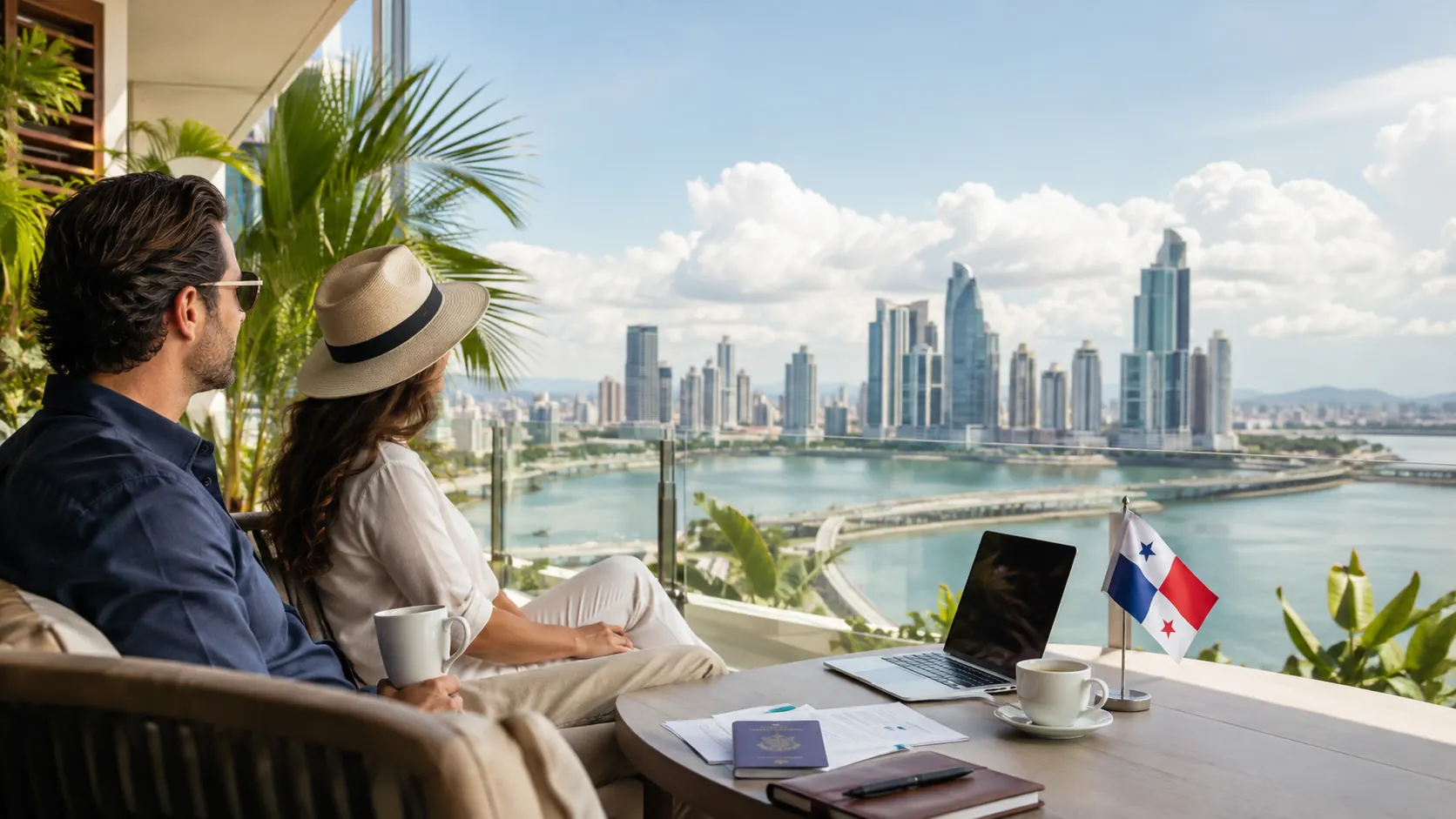
An international Plan B is a forward-looking strategy that gives individuals and families more freedom to decide where they live, work, invest, and build their future. Rather than waiting for circumstances to require a change, it creates an alternative base in another jurisdiction that can support mobility, wealth diversification, family life, and professional opportunities.
For many people, this is not about leaving their home country behind. It is about expanding their options. A second residency, an international investment, a home abroad, or access to another business environment can all become part of a broader strategy designed to create greater flexibility.
Panama has become one of the most appealing destinations for this type of international planning. Its strategic location, widespread use of the U.S. dollar, international connectivity, residency options, financial infrastructure, warm climate, and variety of lifestyles make it particularly attractive to investors, entrepreneurs, professionals, families, and retirees.
What Does an International Plan B Mean?
At its core, an international Plan B is a form of jurisdictional diversification: creating meaningful connections with more than one country so that your lifestyle, finances, and professional activity are not tied entirely to a single location.
A well-designed international strategy can provide several advantages:
- Greater mobility: the possibility of legally residing in another country.
- Financial flexibility: access to investments, assets, or financial services across jurisdictions.
- Family options: the ability to prepare a future move with a spouse and children.
- Professional opportunities: a base from which to manage international business or work.
- Lifestyle choice: access to a different climate, culture, healthcare system, and way of life.
A second residency is often an important part of this strategy, but it is only one component. The broader objective is to connect residency with financial planning, housing, healthcare, family needs, and professional activity.
Second Residency, Relocation, and Property Ownership
Obtaining a second residency does not necessarily mean moving permanently. Many people establish a legal connection with another country years before they plan to relocate, retire, invest, or spend significant time there.
Property can also play a role. A home abroad may provide both an investment and a place to enjoy part of the year. In some cases, real estate can also support a residency strategy.
The real value comes from combining these elements into a practical international lifestyle rather than viewing residency, property, or investment as isolated decisions.
Why More People Are Looking Beyond One Country
Modern careers, businesses, investments, and family relationships increasingly cross borders. Remote work, international education, global investment opportunities, and retirement abroad have made it easier to imagine a life connected to more than one country.
For some people, the main motivation is freedom of movement. Others want to diversify part of their wealth, access new business opportunities, create a future retirement destination, or give their family more choices.
An international strategy can help combine:
- Residency: an additional place to live legally.
- Wealth diversification: exposure to different assets, currencies, or markets.
- Business continuity: a well-connected base for professional activity.
- Family planning: access to housing, healthcare, schools, and a new environment.
- Long-term flexibility: the ability to adapt plans as personal circumstances evolve.
The result can be much more than a contingency measure. It can create an entirely new set of lifestyle and investment opportunities.
Why Panama Has Become So Attractive
Panama combines several characteristics that are difficult to find together in one destination: strong global connections, a dollar-based economy, international services, diverse residency pathways, modern infrastructure, and a wide variety of places to live.
A Strategic Hub in the Americas
One of the country’s strongest advantages is its location. Panama sits between North and South America and has developed into an important hub for trade, travel, logistics, and international business.
Tocumen International Airport reported 20,981,855 passengers and connections to 97 international destinations in 2025. Its network links the country directly with major cities across North America, Latin America, the Caribbean, and Europe.
This makes it particularly convenient for people who want to maintain relationships, investments, clients, or businesses in several countries while enjoying a second base in the region.
A Dollar-Based Economy
The widespread use of the U.S. dollar is another practical advantage. For investors and internationally mobile individuals who already earn, save, or invest in dollars, everyday transactions and financial planning can feel familiar from the beginning.
It also simplifies comparisons between property prices, investments, business costs, and household expenses for people whose wealth is already largely dollar-denominated.
Residency Options for Different Profiles
Panama offers residency categories for different circumstances, including investment, retirement, employment, family connections, and other qualifying profiles.
Preliminary statistics from Panama’s National Immigration Service recorded 16,010 approved permits between January and June 2026, including 5,145 permanent residence permits and 100 under the Qualified Investor category.
This diversity makes the country relevant to very different types of internationally mobile people, from entrepreneurs and investors to professionals, families, and retirees.
A Dynamic Service and Business Economy
The World Bank estimated economic growth of 4.4% in 2025, supported particularly by trade, transportation, logistics, and financial services.
The Panama Canal, major ports, Tocumen Airport, business districts, financial institutions, and professional-services ecosystem reinforce the country’s role as a regional platform.
For entrepreneurs and investors, this means a second residence can also provide access to a commercially active environment with connections throughout the Americas.
A Lifestyle That Can Become Part of the Attraction
One of Panama’s strengths is the variety of lifestyles available within a relatively small country.
Panama City offers modern residential neighborhoods, private hospitals, international schools, restaurants, cultural activities, shopping, business services, and easy international travel.
Those looking for something more relaxed can explore very different environments. Boquete is known for its mountain setting, cooler temperatures, and international community. Coronado combines coastal living with residential developments and services. David provides the conveniences of a regional city close to beaches and highlands.
This variety allows people to choose a base according to the lifestyle they actually want rather than adapting to a single model of expatriate life.
Financial, Tax, and Professional Planning
Wealth and Financial Flexibility
International diversification can provide greater flexibility by giving individuals access to different investments, markets, and financial relationships.
Operational liquidity is especially useful: having capital available for housing, healthcare, travel, investments, or everyday life in the new country.
Panama’s established banking and financial-services sector can complement this strategy, particularly for people conducting international business or holding investments across several countries.
Understanding Tax Residency
Immigration residency and tax residency are separate concepts. Panama generally applies a territorial approach to income taxation, distinguishing between Panamanian-source and foreign-source income.
For internationally mobile individuals, this can be an important part of broader financial planning. The exact treatment depends on factors such as where income is generated, where professional services are performed, and where businesses are managed.
Coordinating immigration decisions with appropriate tax advice helps ensure that the international structure supports the individual’s wider objectives.
Working and Doing Business
The country can also be an attractive base for professionals and entrepreneurs. Its time zone, international airport, logistics infrastructure, financial sector, and connections with markets across the Americas make it particularly convenient for regional business.
When employment or professional activity forms part of the move, the appropriate work authorization should be coordinated with the chosen residency status.
Who May Find Panama Especially Appealing?
- Entrepreneurs and investors: people looking for a connected regional base with access to professional services and investment opportunities.
- International professionals: those working with clients or companies across the Americas who value connectivity and a convenient time zone.
- Families: households looking for international schools, private healthcare, residential communities, and different lifestyle options.
- Future retirees: people attracted by warm weather, international communities, private services, and the choice between urban, beach, and mountain living.
For many of these profiles, the attraction is not one specific feature but the ability to combine residency, lifestyle, business, and investment within the same destination.
How to Build Your International Strategy and What to Avoid
The best starting point is to define what you want your second base to make possible. From there, the process becomes much clearer.
- 1. Define your priorities: lifestyle, mobility, investment, retirement, family, or business.
- 2. Review your situation: consider assets, income, companies, and family needs.
- 3. Choose the right residency route: select the category that best matches your objectives.
- 4. Plan your finances: decide how much capital should remain accessible and how investments fit into the strategy.
- 5. Prepare for everyday life: explore housing, healthcare, schools, transport, and insurance.
- 6. Coordinate tax and professional matters: understand the implications of living and working internationally.
- 7. Prepare documentation: organize passports, civil records, financial information, and other required documents.
- 8. Experience the country: spending time in different regions can help identify where you feel most at home.
It is useful to avoid treating one decision as the entire strategy. Buying property, obtaining residency, or opening a financial relationship works best when each step supports the same long-term objective.
From Alternative Destination to Second Home
What makes Panama particularly compelling is that it can become much more than a backup option.
It can be a place to spend part of the year, build a regional business, invest, enjoy retirement, raise a family, or simply establish another home with excellent connections to the rest of the world.
A gradual approach often works well: explore different areas, understand the residency options, become familiar with local services, and begin developing the relationships that make the country feel increasingly accessible.
Over time, an alternative destination can naturally become part of a broader international lifestyle.
How Orience Can Help You Establish Your Base in Panama
Orience helps investors, professionals, families, and internationally mobile individuals turn their objectives into a coordinated project.
Support can include:
- Identifying the residency route that best matches your goals.
- Planning qualifying investments when applicable.
- Preparing and coordinating immigration documentation.
- Including eligible family members in the process.
- Coordinating investment and source-of-funds documentation.
- Connecting residency planning with professional and work requirements.
- Working alongside legal, tax, financial, and real estate professionals.
- Supporting the practical process of establishing a new home in the country.
The aim is to make the transition clear and coordinated, allowing you to focus on the possibilities that come with having another place in the world to call home.
Conclusion
An international Plan B is ultimately about creating more choices: where to live, how to diversify part of your wealth, where to develop professional opportunities, and what possibilities to create for your family.
Panama has become a leading destination because it combines global connectivity, a dollar-based economy, residency options, international services, business opportunities, warm weather, and an exceptional variety of places to live.
From the energy of Panama City to the mountains of Boquete and the beaches of the Pacific coast, the country can offer much more than an alternative destination. For many internationally minded people, it can become a genuine second home.
Are you considering Panama as your next international base? Orience can help you explore your residency options and coordinate the process so you can begin enjoying the opportunities of living, investing, and working in the country.
Frequently Asked Questions About Moving to Panama (FAQs)
No. Many people establish residency or a second base while continuing to spend significant time in their home country.
Many residency categories allow eligible spouses, children, and qualifying dependents to be included subject to their specific requirements.
Yes. Warm weather, private healthcare, international communities, the dollar-based economy, and diverse places to live make it a popular retirement destination.
Investors may value its strategic location, dollar-based economy, logistics infrastructure, financial services, real estate opportunities, and connections across the Americas.